Nature
Syr Darya River
One of Central Asia's two great rivers, flowing past the region's north-eastern edge on its way from the Fergana Valley to the Aral Sea basin.
A flat, irrigated farming region on the left bank of the Syr Darya, crossed on the way from Tashkent to Samarkand or the Fergana Valley.

Photo 1 of 12
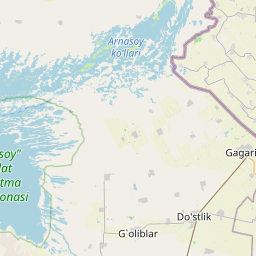
Syrdarya is the smallest region of Uzbekistan by area and one of the least visited. Most of it is the irrigated Mirzachul, or Hungry Steppe: cotton and wheat fields, canals and straight roads between modern towns.
There are no major monuments here, so treat it as a place you pass through, with a stop for lunch or a look at the river. Travellers interested in rural life or Soviet-era planned towns may find it rewarding in its own quiet way.
For most of history this was dry steppe used by herders, which is where the name Hungry Steppe comes from. Caravans crossed it between the Tashkent oasis and the Zarafshan valley and relied on cisterns such as the sardoba at Mirzarabot.
Large-scale irrigation began in the late Russian imperial period and expanded greatly in the Soviet decades, when new canals and state farms turned the steppe into cotton land. Gulistan and Yangiyer are largely products of that era.
Gulistan is about two hours by road from Tashkent. The railway from Tashkent to Samarkand and to the Fergana Valley crosses the region, and regular trains stop at Gulistan and Syrdarya stations; the high-speed Afrosiyob mostly runs through without stopping.
Shared taxis and minibuses link Gulistan with the district towns, and local taxis are cheap. If you are driving through, the highway is straight and fast but watch for farm vehicles and livestock on rural roads.
Spring and autumn are the pleasant seasons. Summer is very hot on the open steppe, and the cotton harvest in early autumn fills the fields with activity.
Roadside chaikhanas along the highway serve plov, shashlik and fresh bread. In summer and early autumn, melons from the steppe are sweet and sold in piles at the roadside.
The region is not a crafts centre. For textiles, ceramics and embroidery, plan your shopping in Tashkent, Samarkand or the Fergana Valley.
If you want to see a sardoba, the restored cistern at Mirzarabot is the most accessible; a driver between Tashkent and Samarkand can add it as a short detour.
Accommodation is limited and mostly local hotels in Gulistan, so most travellers do not stay overnight.
NatureOne of Central Asia's two great rivers, flowing past the region's north-eastern edge on its way from the Fergana Valley to the Aral Sea basin.
Sardoba
A large irrigation reservoir in the south of the region, a wide sheet of water set in open, flat farmland.
 Ensembles
Gumbaz, Sardoba District
A 16th-century domed brick cistern for caravans beside the M39 highway in Sirdaryo region, one of three that survive on the Mirzachul steppe.
 Ensembles
Guliston
The Friday mosque of Guliston, founded in 1905 and rebuilt by the community in 2007–2009, with four minarets, a dome and room for over 3,000 people.
 Ensembles
Gulistan
A small Orthodox church in Gulistan built of mud brick in 1945 and consecrated to St Nicholas in 1955.
Gulistan
The regional history and local-lore museum in central Gulistan, near the music and drama theatre and the main square.
No hosts here yet. Browse experiences across the country.
See all experiences