Ensembles
Kokand
Palace of Khudayar Khan
The palace of the last rulers of the Kokand Khanate, with a tiled facade, painted ceilings and courtyards that now hold the local museum.
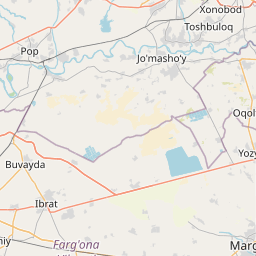
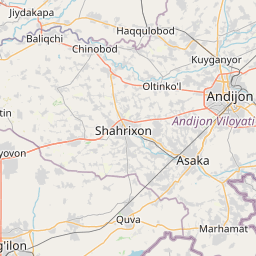
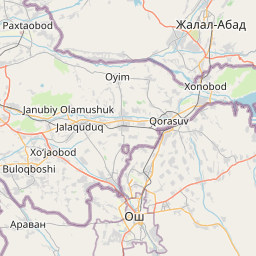
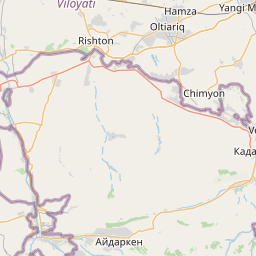
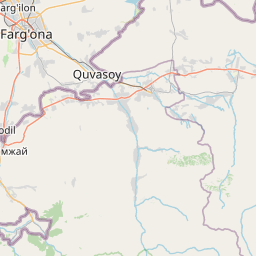
The southern half of the Fergana Valley: the old khans' capital of Kokand, the silk town of Margilan, the potters of Rishtan and the regional centre, Fergana city.

Photo 1 of 12
The Fergana Valley is a wide, fertile basin enclosed by the Tian Shan and Pamir-Alay ranges. Within Uzbekistan it is split between three regions: Fergana in the south, Andijan in the east and Namangan in the north. Each has its own guide page.
Fergana Region holds many of the valley's well-known sights. Kokand has the palace and mosques of the former khanate, Margilan is the centre of hand-woven silk, and Rishtan has been making blue-glazed ceramics for centuries. Fergana city is a calm, green base with hotels and good road links.
This is a working, densely farmed part of the country rather than a museum landscape. Much of the interest lies in workshops, bazaars and everyday street life between the monuments.
The valley has been settled and irrigated since antiquity, and towns such as Kuva and Margilan stood on caravan routes between China and the west. Rishtan's clay and Margilan's silk were known well beyond the valley in the Middle Ages.
In the 18th century Kokand became the capital of an independent khanate that controlled much of the valley and lands beyond it. The Russian Empire annexed the khanate in 1876 and founded a new administrative town, Novy Margelan, which later became today's Fergana city.
In the Soviet period the valley was turned towards cotton and industry, while family crafts survived quietly in the old towns. Since independence many of these workshops have reopened to visitors.
From Tashkent the railway crosses the Kamchik pass through a long tunnel and continues into the valley, with trains stopping at Kokand and Margilan. Check the current schedule and buy tickets in advance through Uzbekistan Railways.
Fergana airport has domestic flights to Tashkent and some international routes. By road, the highway over the Kamchik pass takes you from Tashkent to Kokand; shared taxis leave from Tashkent and agree the price before departure.
Fergana, Margilan, Rishtan and Kokand are connected by good roads, and shared taxis and minibuses run between them throughout the day. Margilan is very close to Fergana city, so many visitors stay in Fergana and make day trips.
For a full day covering several towns, hiring a car with a driver is the simplest option. Inside Fergana city, ride-hailing apps and ordinary taxis are easy to find.
Spring and autumn are the most comfortable seasons. In spring the orchards blossom and the valley is green; in autumn bazaars are full of fruit and the heat has eased.
Summer is hot in the lowlands, though the mountain side valleys stay cooler. Winters are short but can be cold and grey, and some workshops slow down.
The valley's plov is made with its own local rice and is usually cooked in large kazans for weddings and family gatherings; ask at a teahouse which day it is served. Samsa, lagman and fresh flatbread are everywhere.
Kokand is known for halva and other sweets sold in its bazaars. From late spring to autumn the markets are full of apricots, cherries, grapes, melons and pomegranates grown across the valley.
Margilan weaves atlas and adras, the bright ikat silks and half-silks of the valley. At the workshops you can follow the process from cocoons to dyed threads and finished cloth.
Rishtan potters work with local red clay and a blue glaze made from plant ash, and many family workshops welcome visitors. Kokand has a tradition of wood carving and painted ceilings, visible in its palace and mosques.
Kokand, Rishtan and Margilan can be combined in one long day by car, but two days let you spend proper time in the workshops.
The Shakhimardan exclave is surrounded by Kyrgyzstan, so reaching it means crossing an international border; check the current state of the crossings before you plan a trip. Dress modestly at mosques and madrasas, and ask before photographing people at work.
EnsemblesKokand
The palace of the last rulers of the Kokand Khanate, with a tiled facade, painted ceilings and courtyards that now hold the local museum.
 Ensembles
Kokand
Kokand's Friday mosque, known for its long open porch held up by rows of carved wooden columns, with a minaret beside the courtyard.
 Ensembles
Kokand
A late 18th-century madrasa in Kokand with a domed portal and a quiet courtyard, still used as a religious school.
 Mausoleums
Kokand
The burial place of the Kokand khans, with a carved wooden porch and a tiled portal, in a cemetery near the Narbutabiy madrasa.
Margilan
A Margilan workshop where atlas and adras are still made by hand, from unwinding cocoons to tying, dyeing and weaving the threads.
Margilan
A centre where master weavers pass on traditional atlas and adras techniques to apprentices, with workshops visitors can watch.
Photo needed: Evergreen Guesthouse Margilan
Photo needed: Crafts Studio IkatUz